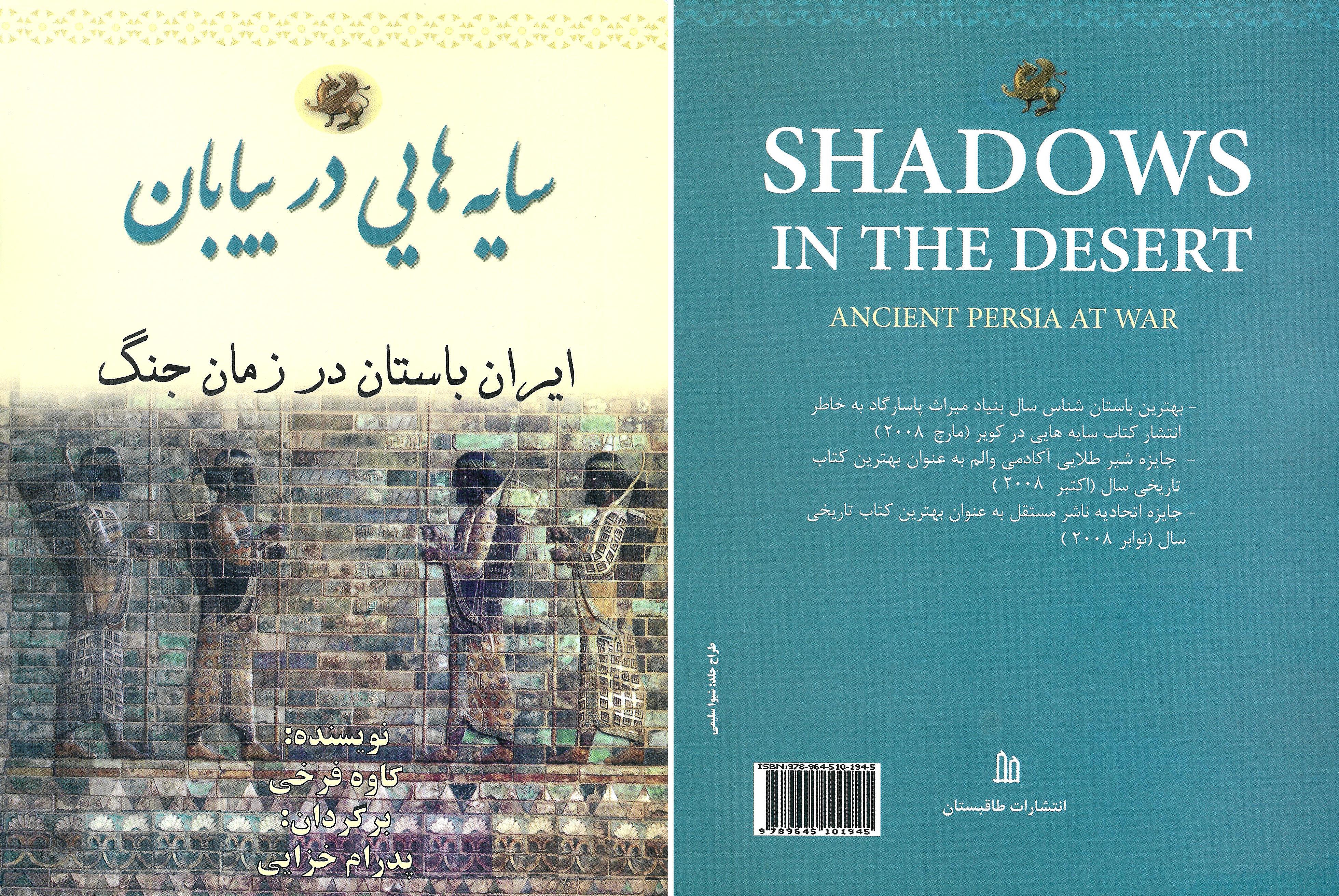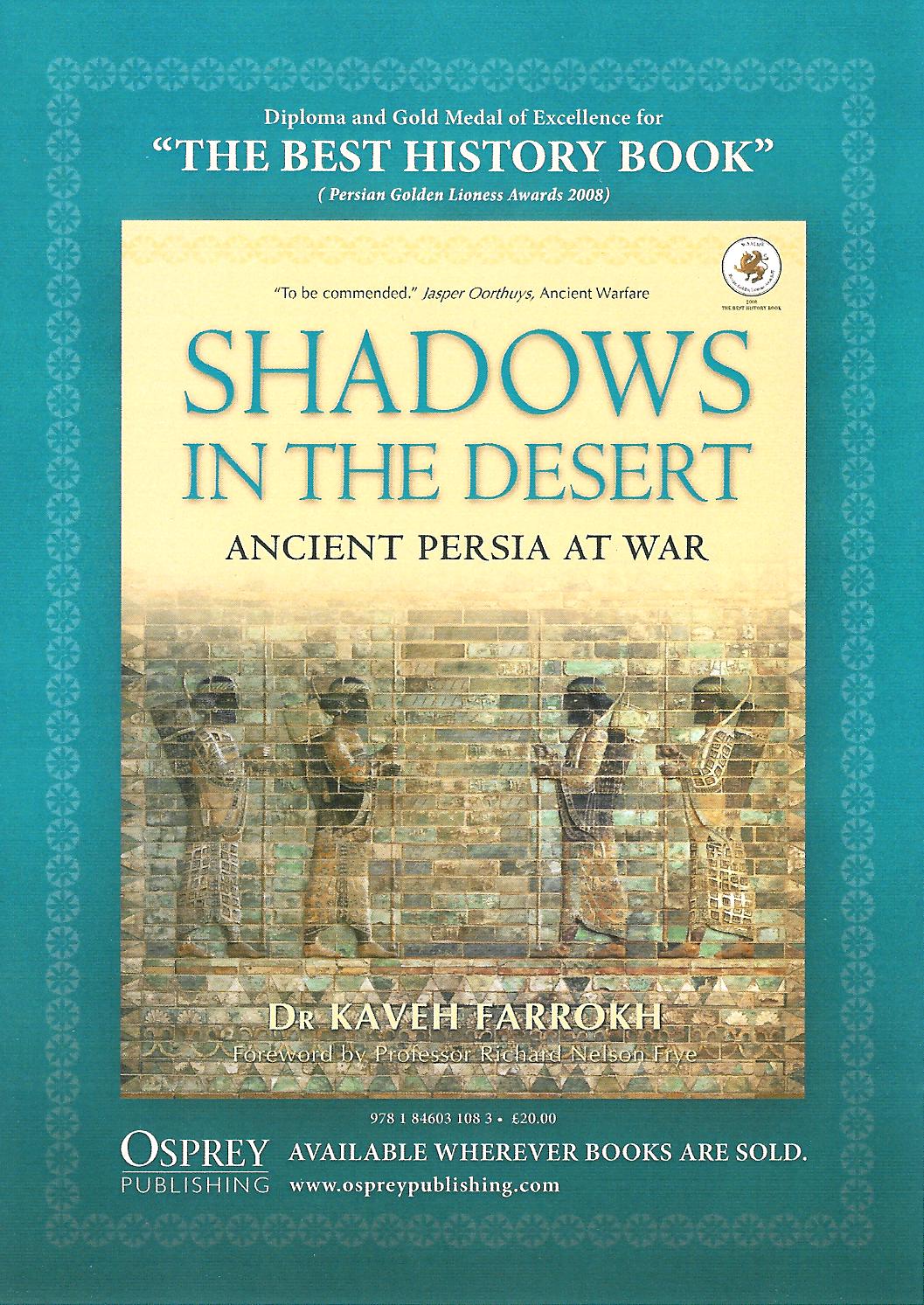
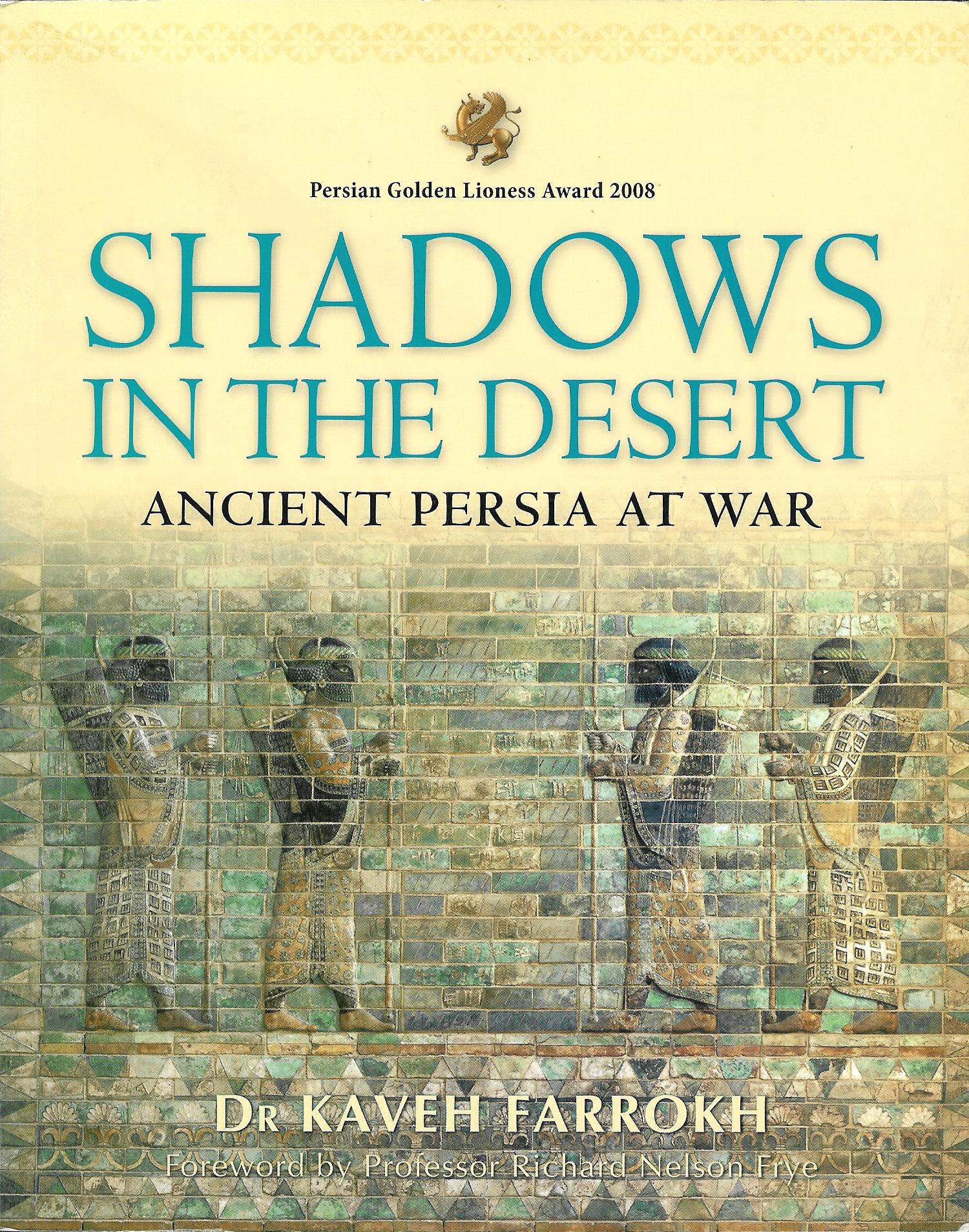
Shadows in the Desert: Ancient Persia at War (available: OspreyPublishing or Amazon.com.) outlines Persia’s contributions to world civilization in areas such as mythology, technology, sciences, literature, militaria, the arts, music, architecture and garments. The main aim of this book is to promote the establishment of a permanent Iranian Studies department in Canadian and American universities.
The book has been cited by the University of Leicester’s School of Archaeology & Ancient History, the University of Ottawa, University of Edinburgh, Stanford University and Harvard University.
 “This is an excellent well-illustrated survey of an important period, useful for students and a general readership alike. It deals not only with military matters, but also more broadly with political developments in Persia. My students have consulted it with profit.” –Dr. Geoffrey Greatrex, Department of Classics and Religious Studies, University of Ottawa.
 “ This beautifully illustrated book will no doubt serve as a useful companion for all those interested in the military history of the pre-Islamic Middle East… Useful maps, photography and color plates make this a handsome and desirable volume; it will be of interest to students and scholars alike.” –Dr. Lloyd Llewellyn-Jones, School of History, University of Edinburgh.
 “… a book for all who have ever been curious about the ‘other’ view on Persia, not from the Western standpoint rooted in Greece, but from the traditions of the Persians themselves… Meticulously researched and documented… I have recommended it to many and am also using it here at Stanford not only for research but also in a course this fall. There is not only no better book on Persian warfare, it is carefully and sensitively written with great verve and love of history. I much appreciate how the research and analyses of texts showed Achaemenid, Parthian and Sassanid military accomplishments, often to the astonishment of Greeks and Romans and beyond. I notice from excellent reviews that other scholars agree.” –Dr. Patrick Hunt, Stanford University.
The following review (click here) has been submitted for the WAIS Society of Stanford University which selects its members in accordance with notability and achievement (Farrokh is a member of WAIS).
Farrokh’s text, Shadows in the Desert: Ancient Persia at War-Персы: Армия великих царей-سایههای صحرا– is recommended reading for a Stanford University course entitled The Art of Persia.
Professor Emeritus Richard Nelson Frye of Harvard University has written the foreword of the book. Professor Frye been recognized as one the world’s premier scholar of Iranian Studies, with achievements spanning well over 40 years of research, publications and textbooks. Professor Frye has noted the following:
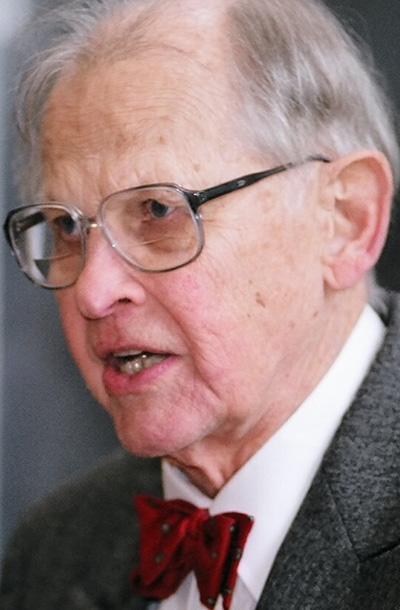 “In this book Dr. Kaveh Farrokh has given us the Persian side of the picture as opposed to the Greek and Roman viewpoint which has long dominated our understanding of these wars. It is refreshing to see the other perspective, and Dr. Farrokh sheds light on many Persian institutions in this history, such as the Sassanian elite cavalry, the “Savaran”. Osprey Publishing is to be congratulated for publishing “Shadows in the Desert: Ancient Persia at War”, which presents another aspect of the wars between East and West in ancient times” –Professor Emeritus Richard Nelson Frye, Harvard University
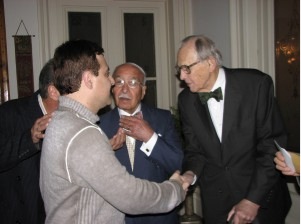
Meeting his mentors: Farrokh greets Professor Emeritus Richard Nelson Frye of Harvard University (shaking hands with Farrokh) and world-renowned Iranologist, Dr. Farhang Mehr (at center), winner of the 2010 Merit and Scholarship award (photo from Persian American Society,March 1, 2008). As noted by Mafie, Professor Frye of Harvard University wrote the foreword of Farrokh’s text stating that “…Dr. Kaveh Farrokh has given us the Persian side of the picture as opposed to the Greek and Roman viewpoint …it is refreshing to see the other perspective, and Dr. Farrokh sheds light on many Persian institutions in this history…” (consult Mafie, 2010, pp.2).
Peer-Reviewed Journals
The Peer-reviewed “Iranshenasi” Journal, a leading prestigious journal of Iranian Studies, praises Farrokh’s book, stating that it
“contains a very useful chronology and a comprehensive bibliography of both primary and secondary sources, which help the reader to find the desired relevant references much faster. In addition to a comprehensive index, Farrokh provides an excellent Endnotes section that offers further explanations, references and relevant information on various key points in each chapter. A great help to students!” (Farhad Mafie of California State University – 2010)
For further information, readers may read the full text of the Iranshenasi review in pdf here:

Dr. Jalal Matini (standing at podium), the Chief Editor of the Iranshenasi journal flanked by the late Iranian poet and thinker, Nader Naderpour (seated at left) at UCLA.
The Iranshenasi journal utilizes first-class academics in the field of Iranian Studies to review recent books and publications. Dr. William L. Hanaway (University of Pennsylvania) is the Associate editor with Professor Emeritus Roger M. Savory of the University of Toronto being a member of Iranshenasi’s Advisory board.
Dr. Kaveh Farrokh has done extensive research on Ancient Iran consulting not only international sources but also Iranian sources and, in this book, has combined a general history together with the product of his extensive research on the military history of the Ancient Iran. As far as the military history of the Achemenian, Parthian and Sassanian periods is concerned, without any doubt, this book is and will remain a very important source and an extremely valuable one. In addition, the book has a beautiful design and contains many interesting pictures. Thus, Shadows in the Desert: Ancient Persia at War can be described in one word: “excellent.” There are many points that make this book an indispensible volume for the study of the military history of Iran. I will explain these points one by one in this review. But just in the beginning I would like to stress that Shadows in the Desert: Ancient Persia at War is unique as it describes the battle formations and tactics and strategies employed by Iranian warriors on the battlefield. Many history books lack precisely this description of military tactics. They pay only cursory attention to the warfare and instead expend much space on describing the court politics, politics, economics, dating of the events, religion, philosophy, art and social relationships. For military historians, ancient weapons analysts, and people interested in swordsmanship and ancient warfare, this book represents a unique gem. As it exactly does what its title reveals “an accurate analysis of ancient warfare in Iran”. But Shadows in the Desert: Ancient Persia at War is not only about the wars of Ancient Iran. It also gives a thorough analysis of the history of different dynasties of ancient Iran providing a meticulous research and cross-referencing. Iran has a very good level of scholarship and Shadows in the Desert: Ancient Persia at War makes extensive use of Iranian sources. This factor gives the book additional weight
“Following the Islamic Revolution in 1979 and the ensuing Cultural Revolution, the pre-Islamic Persian empires became a taboo subject. Consequently the empires of ancient Persia remain as mysterious today as they were to contemporary western scholars. Although Alexander the Great’s conquest of Persia is legendary, the military successes of the Achaemenid, Parthian, and Sassanian empires, along with their revolutionary military technology, tactics, and culture have been almost forgotten in the sands of the East. Shadows in the Desert offers a comprehensive history of Persia’s wars with East and West which spanned a millennium, and oflers an insight into the exchange of ideas and culture that occurred during these clashes between East and West – in military technology the arts, medicine, religion and science. This beautifully illustrated book delves into the rich heritage of the Persians, which was spread around the world through war and conquest, and which, after the fall of the Sassanians, continued to impact upon world civilisations.“
R. Higham has noted in the peer-reviewed journal, Current Reviews for Academic Libraries, February 2008, 45 (6): 1034-1034 that the book has provided a sense of balance between with respect to the perspective often portrayed by
“Greek and Roman observers and historians“
Commentary by Dr. Terry Graham the Literary Editor of the journal, Sufi: A Journal of Sufism:
It is rare to have a history of arms and warfare be so intelligently interwoven with the issues of social development. The context of Dr. Farrokh’s study of Iranian armament from the ancient days of the Persian empire to the Islamic conquest is richly developed, so that this book serves not only as a handbook for military historians but also as a vivid history accessible to the average reader, who may take delight in the workings of Iranian society at every stage as it is played out over a period of more than a millenium.
One advantage of taking ancient history from the military perspective is that armament, armor and weaponry are amongst the most visible pieces of evidence from areas which are less well-covered by written records. Then again, where narratives and histories exist, they tend to focus on military campaigns with their victories and defeats. Using this more substantial evidence as his point of departure, the author goes into the cultural, political, social and economic aspects, of which he gives a thorough-going account in its own right.
With the book lavishly illustrated with color photographs, the reader has a truly Persian banquet of delights on which to feast. Not just the tools of war, but also the objects of art and high culture, for which the Persians set the highest standard during this era, much emulated by the Greeks, the Romans, the Indians and the Chinese – all the bearers of the great civilizations on the historical threshold of our times.
Translation of the Book into Russian
Shadows in the Desert has been translated into Russian and was published in July 2009, one year after its original publication in English:
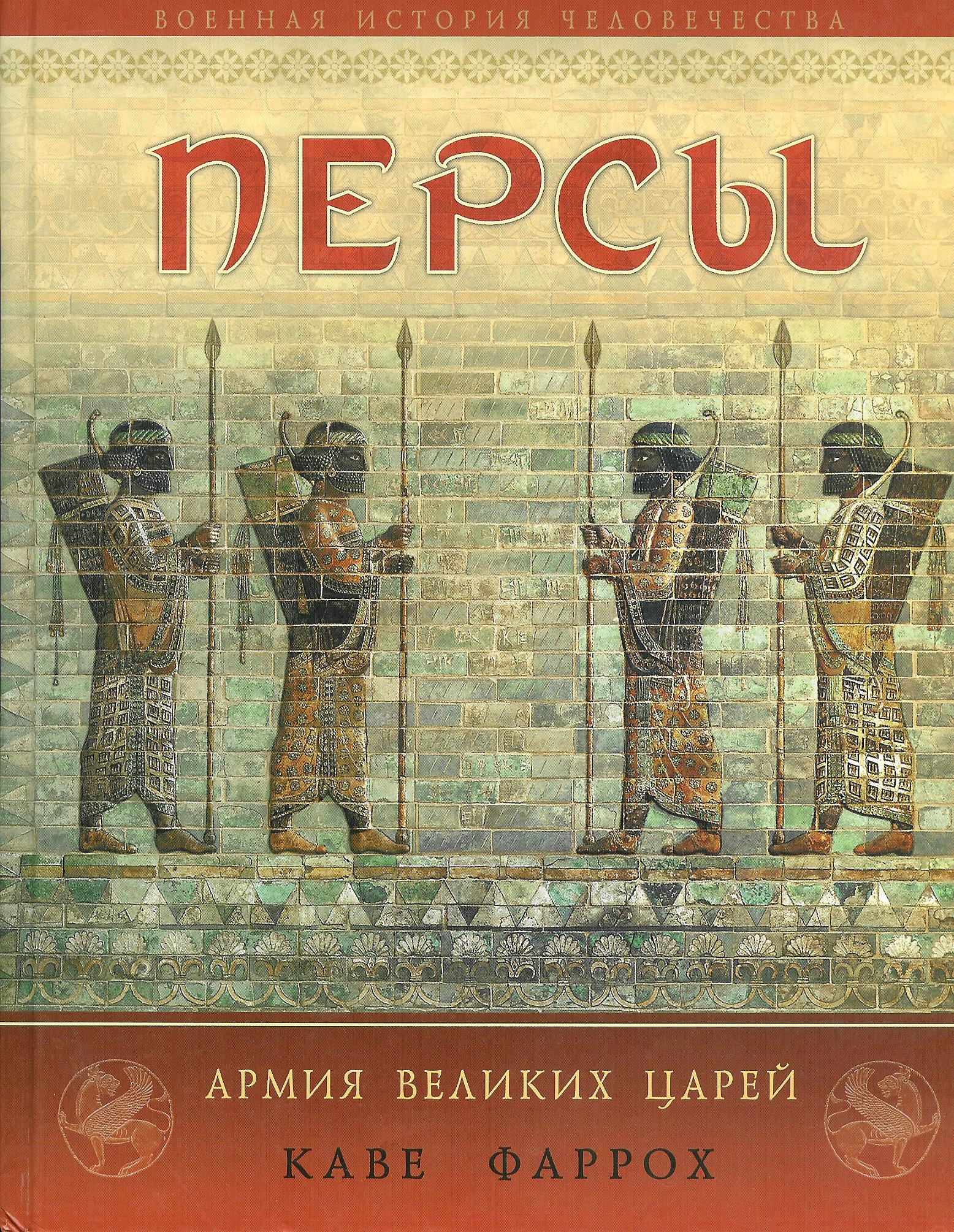
For details of this text in Russian consult the Russian EXMO Publishers website.
Review in Russian:
Подлинная история военного искусства древней Персии, новый взгляд на тех, кого римляне и греки именовали “варварами”. Автор рассказывает о могучей армии Великих царей, об истории империи, ставшей во многом образцом для подражания для тех, кто и разрушил ее, – для Александра Македонского и Рима. Подробный рассказ о становлении персидской державы, о новшествах в военном деле, привнесенных народами Востока. Доктор Фаррох, опираясь на новые данные археологии и последние исследования, воссоздает структуру персидского войска и его тактические приемы. Книга содержит богатейший и уникальный иллюстративный материал и является, по сути дела, энциклопедией военной истории империи Ахеменидов, и мы можем по-иному взглянуть на древнейшее противостояние Востока и Запада, отголоски которого живы и в наши дни.
Translation of the review into English:
This book describes the true military story of ancient Persia, a new perspective different from that narrated by the Romans and Greeks who called the the Persians “barbarians”. The author discusses the mighty armies Great Kings, the history of the Empire, which was largely a role model for those who destroyed her,-and to Alexander and Rome. This book provides a detailed history of the development of Persian power and innovations in military affairs, as brought about by the peoples of the East. Relying on new archaeological data and the latest research, Dr. Farrokh recreates the structure of the Persian army and its tactics. The book contains a wealth of unique illustrative material and is essentially an encyclopedia of Persian military history, and we may otherwise look at ancient confrontation of East and West, echoes of which are alive today.
The book has also received acclaim and support from world-class scholarship, including locales such as the University of Tbilisi and the University of Edinburgh. Professor Kacharava of the University of Tbilisi in Georgia writes:
“Shadows in the Desert: Ancient Persia at War is perhaps on of the finest books that has been produced from Western publishing houses, in this case Osprey Publishing… For the first time, we see a clearly written history book that outlines the relationship between these Iranian achievements to the wars that took place between the Greco-Roman world and ancient Persia…this book draws on excellent research that has received little mention; not to mention previously un-translated Greco-Roman historical sources.”
Professor Nikoloz Kacharava, MD, PhD, The University of Georgia in Tbilisi, Member of Academy of Sciences in Georgia, Active Member of New York Academy of Sciences
Two Translations by Academic Press Publishers of the Book into Persian
The official Iran Book News Association (IBNA) reported of the translation to Persian of the textbook Shadows in the Desert: Ancient Persia at War on September 28, 2011 :
«سايههاي صحرا؛ ايران باستان در جنگ» منتشر شد
The translation of Farrokh’s book has been done by Qoqnoos Publishers with the English to Persian translation having been done by Shahrbanu Saremi.
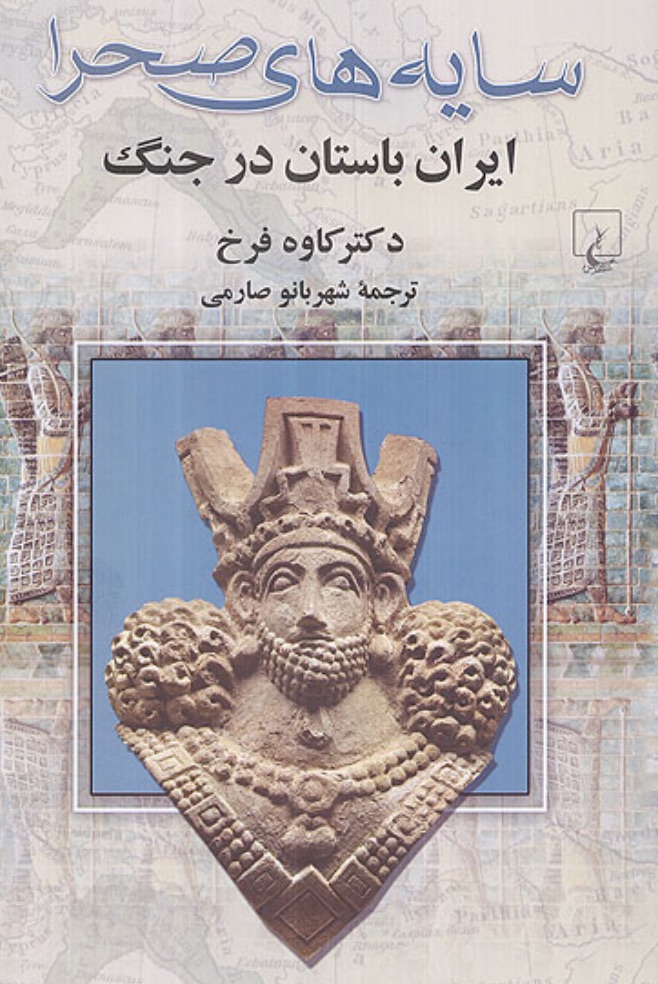
The Tehran Times on July 4, 2011 as well as The Times of Iran (July 4, 2011) announced the translation of Farrokh’s book into Persian with the final report on this made by the official Mehr News Agency of Iran on September, 24, 2011 (see also earlier report by Mehr News in Persian –ناگفتههایی از قدرت سپاهیان ایران باستان در «سایههای صحرا» بازگو شد-). This has also been reported in the Defense Technology News website, PressTV, Khabar Farsi and Balatarin.
The Persian translation has been very well-received in Iran as indicated by the November 2011 newspaper clip below:
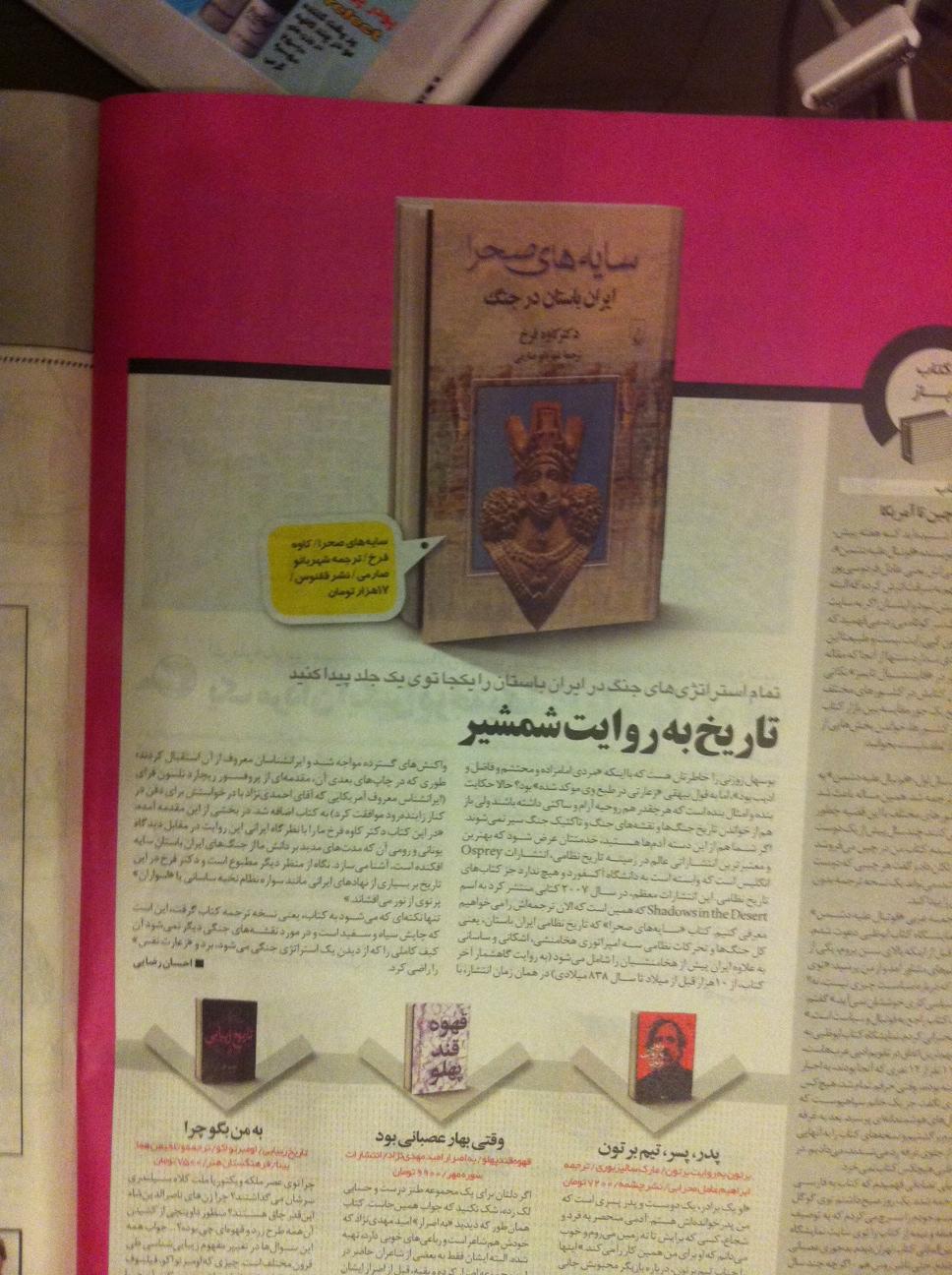
The book in its Qoqnoos Publishing trabslaiton was recently reviewed by Maryam Jaafari in Amordad-Nameh, 2011, December issue, pages 7-9 (pdf). A second academic press, Taghe Bostan publishing which is affiliated with The University of Kermanshah, also translated the book into Persian. Farrokh’s second text translated into Persian for the second time. This version was translated by Bahram Khozai and published in Iran by the -طاق بستان- Taghe-Bastan company on January 21, 2012 (01 بهمن، 1390). The second translation of the book into Persian cited above is independent of the first Persian translation by Shahrbanu Saremi (entitled -سایههایی در بیابان: ایران باستان در زمان جنگ-), which as already noted, appeared through Qoqnoos Publishers in 2011. اReviews in Other Review Venues Favorable reviews have also been written by The Wall Street Journal , CHN (Cultural Heritage News Agency) Service of Iran, Iran Review, Midwest Book Review Society, as well as western blog sites such as those by Alfred Snyder. The Wall Street Journal has noted that: Kaveh Farrokh is an expert on Persian languages and Iranian history whose new book, Iran at War: 1500-1988, provides a full examination of modern Iranian military history… His previous title Shadows in the Desert: Ancient Persia at War (Osprey, 2007) was named “Best History Book” by the World Academy of Arts Literature and Media in 2008. Dr. Patrick Hunt at Stanford University, said this about it, ”… a book for all who have ever been curious about the ‘other’ view on Persia, not from the Western standpoint rooted in Greece, but from the traditions of the Persians themselves… Meticulously researched and documented…..” CHN (Cultural Heritage News Agency) Service of Iran has noted that: “Containing information never published in English before, Shadows in the Desert provides a comprehensive history of Persian Wars with East and West from the 6th century BC, and offers an insight into the exchange of ideas and culture that occurred during these clashes in military technology, the arts, medicine, religion, and science. This beautifully illustrated book delves into the rich heritage of the Persians, which was spread through war and conquest, and which, after the fall of the Sassanians, continued to impact upon civilization around the world. He also delves into the forgotten cultural heritage of the Persians, spread across the world through war and conquest, which, even after the fall of the Sassanians, continued to impact upon the Western world. In this book Dr. Kaveh Farrokh has also shown the Persian side of the picture as opposed to the Greek and roman viewpoint which has long dominated our understanding of these wars. It is refreshing to see the other perspective. The first charter of human rights which was composed during the glorious Achaemenid Empire by its founder, Cyrus the Great, and the cylinder on which the words are inscribed and is being kept at the British Museum, is another live witness to Persian glory during ancient times.” Iran Review has noted that: The empires of ancient Persia remain as mysterious today as they were to contemporary Western scholars. Although Alexander the Great’s conquest of Persia is legendary, the military successes of the Achaemenid, Parthian, and Sassanian empires, along with their revolutionary military technology, tactics, and culture have been almost forgotten in the sands of the East. Containing information never before published in English, Shadows in the Desert offers a comprehensive history of Persia’s wars with East and West which spanned over a millennium, and offers an insight into the exchange of ideas and culture that occurred during these clashes between East and West, not only military technology, but influences in the arts, medicine, religion and science. The Midwest Book Review Societyhas noted that: “Dr. Kaveh Farrokh’s SHADOWS IN THE DESERT: ANCIENT PERSIA AT WAR (9781846031083, $29.95) will please specialty collections strong in early Persian history or military history. It is unique in that it comes not from a Western perspective but from an academic of Iranian descent who has produced a nonpolitical, complete history of pre-Islamic Iran. Photos display artifacts, weapons and sites while military reconstructions blend in Islamic history and cultural heritage to make for one of the most authoritative histories of the Persian empires to see recent print: a ‘must’ for any serious college-level collection.“ Alfred Snyder has noted that: “This book is an interesting catalog of Persian military history, but it is far more than that. I have long been a fan of neglected central Asian ancient history, beginning with my boyhood fascination with Alexander the Great and the previous conflicts with the Persian Empire. However, I had become aware that there is a lot more to it than that. A great deal more, actually… The book tells the story of three great empires, often quite neglected. They are largely neglected because of the Alexander effect (as if these three empires did not even exist after Alexander’s defeat of the first one) and the constant historical focus on Rome. The reality was that Rome was a constant opponent of Persia, and never really defeated it. No Persian monarch was ever marched behind an imperial Roman chariot, and no Persian capital was ever sacked by the Romans. For five centuries Rome tried to crush Persia and failed. No Persian army ever surrendered to Rome… The part of the book that made it all worth my time on the porch in Mexico was the last section, which dealt with the many contributions that these three Persian empires has made to global culture that have been largely ignored. Certainly, the above two factors (Alexander and Rome) can explain part of this, but there was been a huge realignment of western study of Persian history and influence since the change of events in 1980 and the rise of the current Iranian state. Departments have been changed, some phased out, and new works suddenly silent about a rich history of contributions. Dr. Farrokh does an excellent job of trying to document and recover from these events without becoming unscholarly.” This was reported by major media outlets such as the BBC as well as well as Iran’s equivalent of the New York Times, The Kayhan Newspaper (the Iranian equivalent of the Nw York Times). Farrokh’s award has also been announced on widely consulted Iranian on-line sources such as Iranian.com (which also selected him as “Iranian of the Day” in May 31, 2007) and the Persian Mirror Magazine. Hardback; April 2007; 320 pages; ISBN: 9781846031083; Buy this book from Amazon.com or OspreyPublishing. Farrokh also engaged in a book signing event on the night of October 31st, 2008 after having received the Persian Golden Lioness Award.: A total of 29 books were signed to signify the arrival of Cyrus the Great into Babylon on October 29th 543 BC. The book has also been selected as being among the top three History books of 2008 by the Independent Book Publishers Association of the United States. Farrokh has been interviewed for his book by the Leonard Lopate Show (WYNC FM 93.9, August 20, 2007) in New York, We Talk Back of Louisiana and Mississippi (KMLB-AM 1440, August 11, 2007), and The Tommy Schnurmacher Show in Montreal, Canada (CJAD AM 800, August 6, 2007). Farrokh was interviewed live regarding his book by Voice of America on Saturday December 20, 2008 (10:30 AM Pacific, 1:30 PM EST, 10:00 PM Iran). Please see the interview in Persian in two parts: Part 1: Part 2: This interview also available through the Iranian-UK [Tehran-London] Association article “Goftegoo ba Kaveh Farrokh Iran-Shenas [Interview with Kaveh Farrokh Researcher of Iranian Studies]“.